
In 1955, psychologists Joseph Luft and Harrington Ingham created a technique to better understand ourselves and improve communication with others. They named the model the “Johari Window” as a combination of their names.

The four quadrants represent the four parts of ourselves:
- Open – behaviors, feelings, and thoughts known to self AND known to others
- Hidden – behaviors, feelings, and thoughts known to self BUT NOT known to others
- Blind Spot – behaviors, feelings, and thoughts NOT known to self BUT known to others
- Unknown – behaviors, feelings, and thoughts NOT known to self AND NOT known to others
When we start off in a new community (for example, a new job or a new school), the “Open” quadrant often starts out small. We are not quite sure how much to share and how much to keep hidden. There is the dance of learning who to trust.
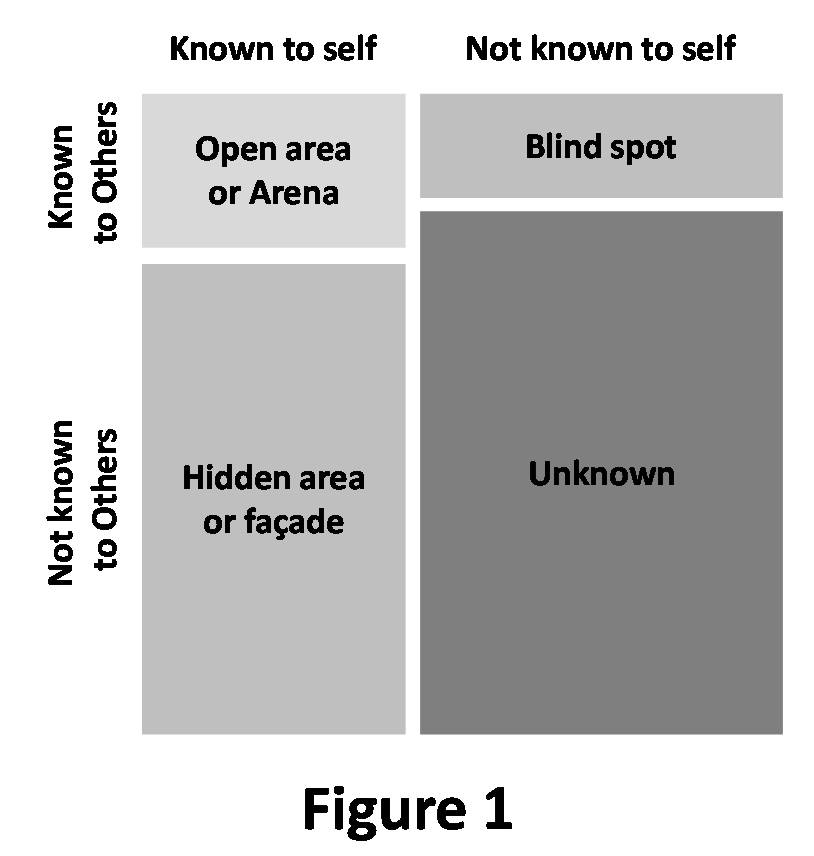
To improve the trust in our relationships, the Johari window advocates communication to widen the “Open” area. When we share more about ourselves, we establish trust and prevent misunderstandings. Others may misjudge our motivations when they have limited information. The model also advocates personal growth to learn about ourselves. When we solicit and incorporate feedback, the “Open” area enlarges and the “Blind Spot” shrinks. As life takes us on new challenges and we explore new arenas, we may discover the “Unknown” parts of ourselves. This includes the unconscious parts that need healing as well as the unexplored talents and strengths that we did not know that we possessed.

The Johari Window allows us to bring more of us into the present moment and into our relationships to create more trust, better communication, and a more joyful connections.